
How to Be a Therapist When the World Feels Like It’s Falling Apart
How to Be a Therapist When Everything Feels Unstable
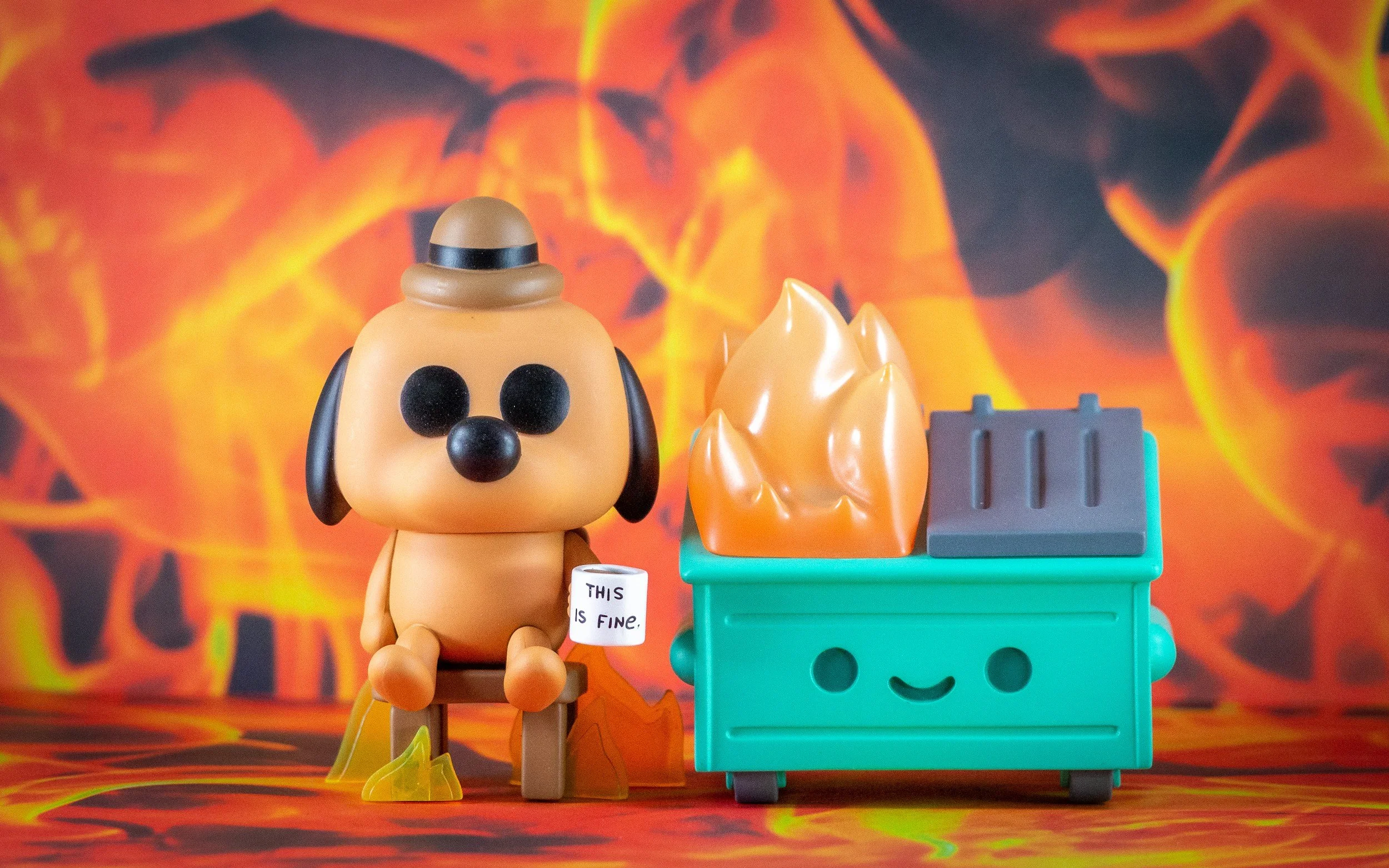
In addition to being a therapist, I am also a clinical supervisor. This means that I supervise provisionally licensed clinicians until they are fully and independently licensed. A topic that has come up frequently is being a therapist in today’s world.
Many therapists are asking a question they don’t always feel allowed to say out loud:
How do I keep doing this work when the country feels like it’s falling apart?
Between political unrest, attacks on bodily autonomy, economic precarity, climate grief, and collective burnout, it’s not just clients who are struggling. Therapists are feeling it too.
And pretending otherwise doesn’t make us more professional—it makes us more disconnected.
You Are Practicing Therapy Inside the Collapse, Not Above It
There is no neutral vantage point outside of social and systemic instability.
Therapists are living in the same world as their clients, with the same nervous systems absorbing threat, uncertainty, and loss. I previously wrote this blog with some additional ways to stay regulated and you might want to check out that information as well.
The shift many clinicians are quietly making is this:
Therapy is also now about preservation.
Helping clients:
stay oriented in reality
reduce internalized shame for system-driven distress
understand their nervous system responses
remain connected to self and others
This is not “lesser” work.
It is essential work.
Naming Reality Is Not Political Indoctrination
When therapists avoid acknowledging the world clients are living in, therapy can unintentionally become invalidating.
You don’t need to:
debate politics
take on the role of educator
You do need to avoid framing systemic harm as individual pathology.
Saying:
“Of course your anxiety makes sense right now.”
is not biased.
It’s accurate.
Therapy in Unstable Times Is About Witnessing, Not Fixing
When systems are unstable, the therapeutic stance shifts:
from symptom eradication → nervous system regulation
from “coping better” → staying human
from false reassurance → grounded presence
Clients may not be asking:
“How do I feel better?”
They may be asking:
“How do I keep going without becoming numb or disconnected?”
That is a valid therapeutic question.
Your Countertransference Is Information, Not Failure
If you feel:
exhausted by institutions
angry at systemic injustice
disillusioned with “self-care” rhetoric
scared about the future
You are not unprofessional.
You are responsive to reality.
The work is not to eliminate these feelings—but to ensure they are held in spaces where you don’t have to be a blank slate as we were taught in school.
Consultation, supervision, and peer spaces that allow political and ethical complexity are no longer optional. They are protective.
Redefining Hope in Therapy
Hope does not mean:
“Everything will work out”
“The system will fix itself”
“Just think positively”
This is not a place or time for toxic positivity.
In hard times, hope can look like:
choosing integrity
staying relational
refusing to bypass grief
helping one person feel less alone
This is not naive optimism.
It is grounded resistance.
You Cannot Hold the Entire World—and You’re Not Supposed To
You are not responsible for:
saving democracy
fixing capitalism
healing intergenerational trauma alone
You are responsible for:
practicing ethically
honoring your limits
choosing where you give your energy
Boundaries are not apathy.
They are how therapists survive long enough to keep helping.
Why Therapy Still Matters During Collective Collapse
In times like these, therapy may be one of the few remaining spaces where:
nuance is allowed
grief isn’t rushed
rage isn’t pathologized
care isn’t transactional
That matters deeply.
Not because it fixes everything—
but because it keeps people human.
Final Truth for Therapists
You are not failing because this work feels harder.
The work is harder because the world is harder.
Continuing to practice with ethics, humility, and nervous-system awareness in times like these is not weakness.
It’s courage.