
When the World Is Still on Fire (And What Actually Helps)
I previously wrote about when it feels like the world is falling apart shortly after Hurricane Helene devastated multiple states. The hits have still been hitting. I’m writing this blog as a reminder of what I need to do right now and hope it helps you find some moments of being regulated.
It’s scary in the US right now. Terrifying. And it’s bringing up a lot of wounds related to feelings of safety for many of the people that I work with.
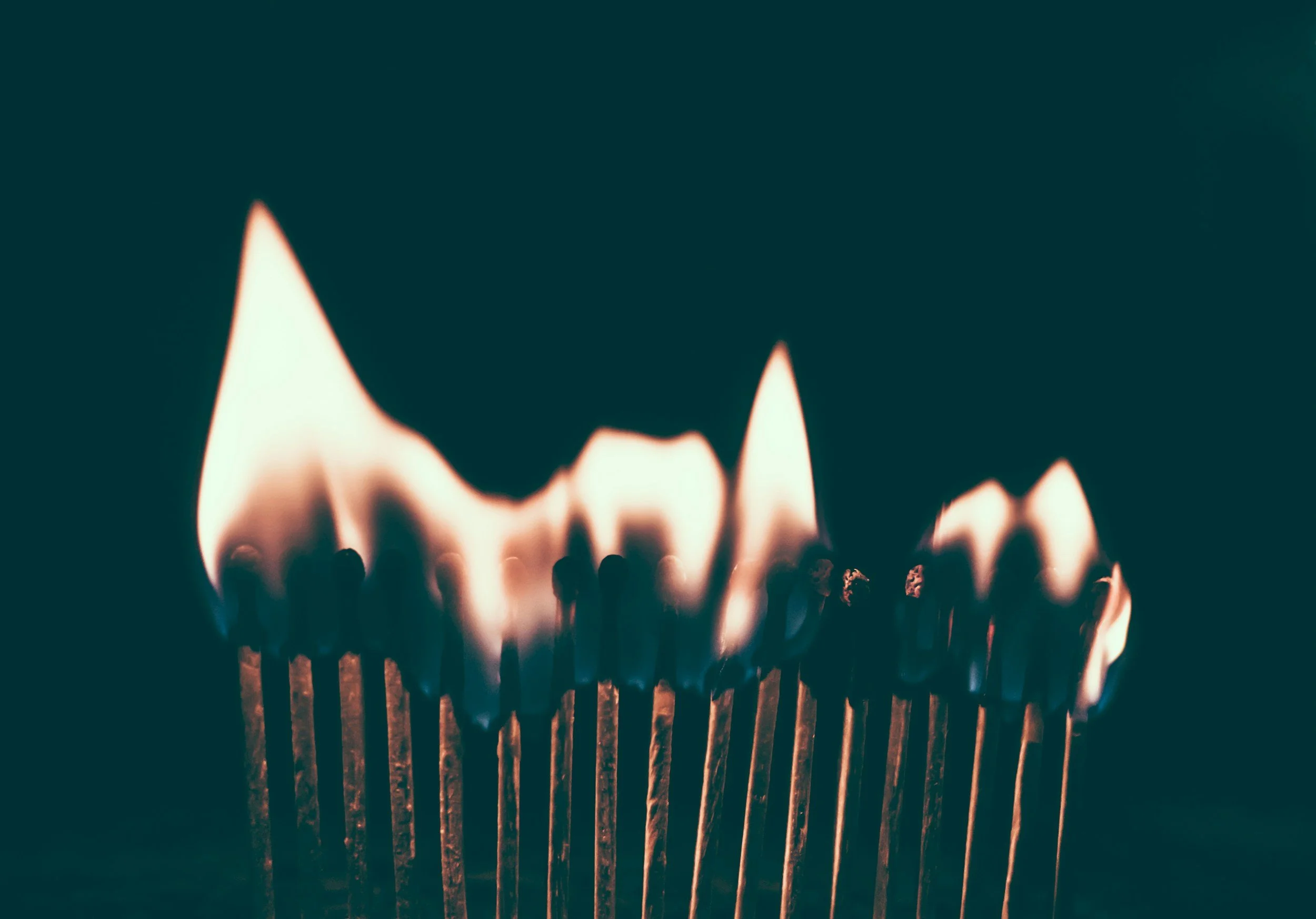
When “Just Stay Positive” Isn’t an Option (and let’s be honest, it should never really be an option)
If it feels like the world has been on fire for years, and in all the different ways; politically, environmentally, socially, economically. You’re not imagining it. This is happening.
For many people, the stress isn’t coming from one event. It’s the relentless stacking of crises without enough time to recover in between. Innocent people are being gunned down in our streets. Wars continue. Climate disasters escalate. Systems fail. Basic stability feels fragile. And just when your nervous system starts to exhale, something else happens.
If you’re tired, numb, angry, anxious, or oscillating between doom-scrolling and total shutdown, that’s not a personal failure. That’s a nervous system responding to prolonged threat.
Why This Feels So Hard (Even If Your Personal Life Is “Fine”)
Humans aren’t wired for constant global awareness of danger. Our brains evolved to respond to threats we could see and act on. Today, we’re exposed to a nonstop stream of distressing information without clear ways to resolve it (thanks social media and non stop news channels).
This creates:
Chronic sympathetic activation (fight/flight)
Dorsal shutdown (numbness, exhaustion, hopelessness)
Moral injury (“I care, but I feel powerless”)
Collective grief that doesn’t get named or processed
You can have a job, a home, relationships, and still feel deeply unsettled. Safety isn’t just external; it’s neurological.
What Doesn’t Actually Help (Even If It’s Well-Intentioned)
Let’s name this plainly:
“Just focus on what you can control”
“Other people have it worse”
“Take a break from the news”
“Practice gratitude”
These aren’t wrong and are good things to remember and practice, but when offered too early or too simplistically, they can feel invalidating and dismissive. They skip over the reality that something is wrong, and your body knows it.
That’s bypassing.
And your nervous system doesn’t relax when it feels dismissed.
What Actually Helps When the World Feels Unsafe
This isn’t about fixing the world. It’s about supporting your system so you can stay human inside it.
Name What’s Happening Without Trying to Fix It
Sometimes the most regulating thing is saying:
“This is genuinely overwhelming, and it makes sense that my body is reacting.”
Naming reality creates internal coherence. You’re not spiraling, you’re responding. You’re naming it.
Shrink the Time Horizon
When the future feels terrifying, zoom in.
Ask:
What feels tolerable today?
What’s one thing I can do in the next hour?
What supports regulation right now, not forever?
Nervous systems calm through immediacy, not five-year plans or even tomorrow plans.
Limit Exposure Without Disconnecting From Meaning
This isn’t about ignorance or sticking your head in the sand. It’s about dosage.
Try:
One intentional check-in with news instead of constant grazing
Following people who contextualize rather than sensationalize
Pairing information intake with grounding (feet on the floor, breath, movement)
Information without regulation equals overwhelm.
Reclaim Small, Embodied Anchors
When the world feels out of control, your body needs proof of safety.
Helpful anchors:
Repetitive movement (walking, swimming, yoga)
Temperature shifts (warm showers, cold water on wrists or head)
Sensory cues (weight, texture, scent)
Being with someone without needing to “talk it through”
This isn’t self-care fluff. It’s nervous system maintenance.
Allow Both Care and Limits
You’re allowed to care deeply and rest.
To stay informed and take breaks.
To grieve and experience joy without guilt.
Burnout doesn’t help the world. Regulated people are more sustainable participants in change.
If You’re Feeling Hopeless, That Matters
Hopelessness isn’t a sign you’ve “given up.” It’s often a sign of exhaustion.
If your thoughts start sounding like:
“What’s the point?”
“Nothing will change”
“I can’t do this anymore”
That’s a cue for more support! Not more willpower. Therapy, community spaces, and trauma-informed care can help metabolize what you were never meant to carry alone.
You’re Not Broken — You’re Responding
The world is heavy right now. Feeling affected by it means you’re paying attention, not failing at resilience.
The goal isn’t to feel okay about everything.
The goal is to stay connected to yourself while living in an uncertain world.
And that is already a meaningful act.
If you’re looking for a therapist to help you learn more about regulating your nervous system, I offer therapy for eating disorders, trauma, and anxiety in Marietta, GA, Coconut Creek, FL and virtually across GA, FL and SC.