
Is Self-Help Making Your Anxiety Worse? The Hidden Trap of Constant Self-Improvement
When Healing Turns Into Another Source of Stress
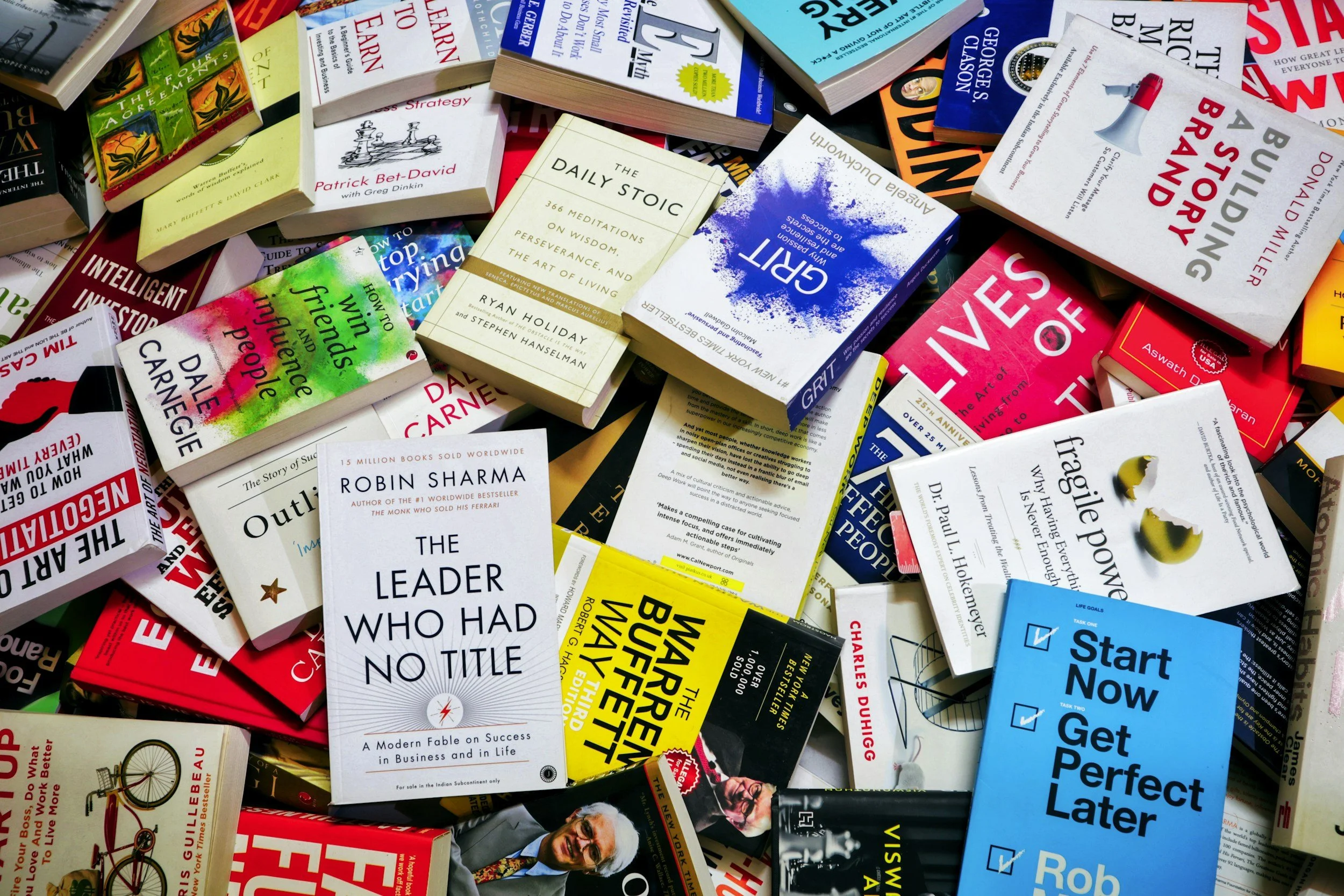
You're Reading Every Book. Listening to Every Podcast. Watching Every TikTok. Adding more books and gadgets into your shopping cart.
So why do you still feel anxious? Why does everyone else have it all together?
If you've found yourself consuming endless self-help content but feeling increasingly overwhelmed, you're not alone.
Ironically, in today's world, having unlimited access to mental health information sometimes make anxiety worse, despite the promise of making it better.
Self-help isn't inherently bad. In fact, many books, podcasts, and social media accounts offer incredible education and hope.
The problem isn't learning.
The problem is when learning quietly replaces healing.
Why Self-Help Can Become Part of the Anxiety Cycle
Anxiety loves uncertainty. It thrives off of it. It needs certainty though and unfortunately certainty in life is difficult to obtain.
Our anxiety constantly whispers:
"Read one more article."
"Take one more quiz."
"Watch another video."
"You're probably missing something."
Before long, self-help becomes another compulsion.
Instead of reducing anxiety, you're feeding it.
Your brain begins believing:
"Once I finally understand everything, THEN I'll feel okay."
Unfortunately...
That day rarely comes.
Information Isn't the Same as Integration
One of the biggest misconceptions about healing is believing that more knowledge automatically creates change.
It doesn't.
You can know:
every grounding exercise
every attachment style
every nervous system fact
every trauma response
every cognitive distortion
…and still feel anxious.
Why?
Because anxiety also lives in the nervous system, not just in your thoughts.
Understanding why your body reacts isn't the same as teaching your body that it's safe.
Healing happens through experience, not just information.
We have to make actual changes in our lives, do something different.
We can’t just read or hear something and our problems are solved. We need the experience.
The Self-Improvement Trap
Many people with anxiety unknowingly turn healing into another performance.
Their inner dialogue sounds something like:
"I need to meditate more."
"I should journal twice a day."
"I haven't read that new book yet everyone else is talking about."
"I must be doing therapy wrong."
"I should be farther along."
Notice something?
Even self-care becomes another way to criticize yourself.
Instead of creating peace, healing becomes another impossible standard to achieve.
When Self-Help Fuels Perfectionism
Anxiety and perfectionism often travel together.
The more resources you consume, the more you begin believing there's a "right" way to heal.
You start comparing yourself to:
people on social media
influencers
therapists
podcast hosts
people who seem "healed"
You begin asking:
"Why am I still anxious?"
"What am I missing?"
"Why isn't this working for me?"
But healing isn't a checklist.
It's not linear.
And it certainly isn't a competition.
Healing Requires Tolerance of Uncertainty
Here's one of anxiety's biggest tricks:
It convinces you that if you gather enough information, you'll finally get rid of uncertainty.
But working on anxiety involves learning to tolerate uncertainty—not eliminate it. Sorry, there is just no way around it. Trust me, I also cringed when I learned that we just needed to sit with uncertainty.
Instead of needing every answer, healing often sounds like:
"Maybe I don't need to know everything."
"Maybe I can feel anxious without fixing it immediately."
“Maybe I can handle it.”
That's uncomfortable.
But it's also freeing.
Signs Self-Help May Be Increasing Your Anxiety
You might be stuck in the self-help cycle if you:
Constantly search for reassurance online (or friends or family).
Feel overwhelmed by conflicting mental health advice.
Jump from one technique to another without practicing any consistently.
Feel guilty when you don't complete your wellness routine. Wellness should NOT stress us out.
Spend more time researching healing than actually living your life.
Believe there's one perfect answer you're still missing.
Feel worse after consuming mental health content.
If several of these resonate, you're not failing.
You may simply be caught in an anxiety loop disguised as self-improvement.
The Difference Between Healthy Habits and Anxiety-Driven Habits
Healthy learning looks like:
Curiosity
Flexibility
Practicing what you learn
Taking breaks
Accepting imperfection
Anxiety-driven learning often looks like:
Compulsive researching
Constant reassurance seeking
Fear of making mistakes
Never feeling "ready"
Always needing one more answer
The behavior may look similar from the outside.
The motivation underneath is completely different.
Your Nervous System Doesn't Heal by Consuming More Content
Think about learning to swim.
You could read 100 books about swimming.
Watch every YouTube tutorial.
But eventually…
You have to get into the water.
The same is true for anxiety.
Healing happens through:
experiencing safety
practicing regulation
allowing discomfort
building new emotional experiences
gradually teaching your brain that you can handle uncertainty
Knowledge supports healing.
Experience creates it.
Sometimes the Healthiest Thing You Can Do Is Close the App
Not every anxious moment needs another podcast.
Not every fear needs another Google search.
Not every symptom needs another explanation. Seriously on this one, can we also stop getting explanations from non-mental health professionals on TikTok?
Sometimes your nervous system needs something far simpler:
Take a walk.
Call a friend.
Sit outside.
Notice your breathing.
Let the question remain unanswered for now.
Healing often grows in the quiet moments between searching.
Therapy Can Help You Move From Knowing to Healing
Self-help can be an amazing starting point. It’s a great tool!
But if you've been stuck in the cycle of learning without feeling better, it may be time for something different.
Therapy isn't about giving you more information.
It's about helping your brain and nervous system create new experiences.
Whether through EMDR, somatic approaches, Acceptance and Commitment Therapy (ACT), or other evidence-based treatments, therapy helps transform insight into lasting change.
Because healing isn't measured by how much you know.
It's measured by how much freedom you've regained.
Frequently Asked Questions
Can too much self-help make anxiety worse?
Yes. When self-help becomes compulsive reassurance-seeking or information overload, it can unintentionally reinforce the anxiety cycle instead of reducing it.
Why do I know so much about anxiety but still feel anxious?
Knowledge alone doesn't retrain the nervous system. Lasting change comes from practicing new responses, building emotional flexibility, and having corrective experiences, not just understanding anxiety intellectually.
Is Googling anxiety symptoms bad?
Occasional research is normal, it may be how you found this! But repeatedly searching symptoms for reassurance can strengthen anxiety over time, especially for people with health anxiety or generalized anxiety.
How do I stop obsessing over self-improvement?
Start by noticing whether you're learning from curiosity or fear. Limiting mental health content, practicing one or two skills consistently, and working with a therapist can help shift the focus from constant fixing to sustainable healing.
When should I seek therapy instead of relying on self-help?
If anxiety continues to interfere with your relationships, work, sleep, or daily life despite trying self-help strategies, therapy can provide individualized support and help address the underlying patterns maintaining your anxiety.
Final Thoughts
At Resilient Counseling, we provide trauma-informed therapy for anxiety, trauma, and eating disorders. We help clients understand the connection between their nervous system, past experiences, and current symptoms so they can move toward greater calm, confidence, and resilience.
If anxiety is keeping you stuck, support is available.